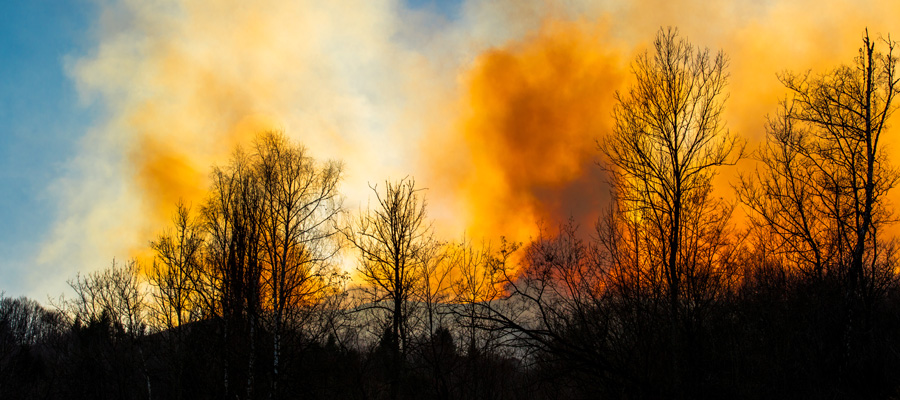
As tree-planting company representatives from across British Columbia gather in Kelowna for a conference this week, a lot of attention will focus on the question of just how significant a reforestation challenge we have on our hands in the province.
Even those of us who know comparatively little about our forests understand that some astonishing things have occurred in recent years that raise questions about the health of one of our most important publicly owned resources.
Two of the more evident of those things are the epic mountain pine beetle attack that has left in its wake one billion or so dead older pine trees, and a spate of terrifically intense fires that have burned forests across huge swaths of land.
But as it turns out, these are far from the only events that are giving rise to a burgeoning reforestation crisis in the province. While the beetle attack and fires have predictably captured media attention, another event with significant implications for the health of future forests has quietly unfolded.
That event is the widespread die-off of large numbers of planted trees in allegedly healthy tree plantations – our so-called future forests.
How significant a problem this is and what it means for the province’s already considerable reforestation challenge is not yet fully understood. But as the results of early field studies come in, it appears that the province has a lot more forestland in need of rehabilitating than previously thought.
Last year, Forests Minister Pat Bell claimed that the amount of forestland that was “not sufficiently restocked” and in need of replanting was in the vicinity of 240,000 hectares or 600 Stanley Parks in size. But this week Anthony Britneff, a former public servant who was in his 40th year of service in Bell’s ministry when he retired last year, will vigorously challenge his former boss’s number at the Kelowna conference, suggesting it may be off by a factor of 10 or more.
Part of the reason why, has to do with the growing number of once healthy tree plantations that now show significant signs of stress.
In the tree-panting world, areas of logged land that have been replanted are only considered to be successfully rehabilitated when their trees are deemed “free-to-grow”.
Free-to-grow means that the planted trees have reached a height where they can no longer be outcompeted by undesired plants. At this point, it is assumed that the unimpeded trees will simply continue growing until a point decades down the road when they are logged.
A few years ago, however, some forest scientists began to question whether this assumption was correct. They worried that if the provincial ministry of forests relied on such an assumption to guide it in setting logging rates, and the assumption later proved incorrect, sustainable management of publicly owned forests was in doubt.
It turned out they were right to raise the question and that a lot of free-to-grow tree plantations were in trouble. Among those to initially focus on the health of such plantations was Alex Woods, a forest pathologist formerly with Bell’s ministry and now with the new Ministry of Natural Resource Operations.
Woods’ preliminary results, presented to an international gathering of forest disease experts in Valemount last October, indicated that fully one third of free-to-grow plantations in the Okanagan region had fewer than the minimum number of trees needed to meet provincial reforestation requirements. Other areas of the province are being similarly surveyed.
The bad news with such findings is that future forests may deliver far less by way of important natural services (cycling water) and economic benefits (wood for forest industry jobs). The good news is that with proper resources our public servants can continue the critically important fieldwork that may lead to productive changes in how we reforest public lands for maximum public benefit. Whether those resources will continue to be there, however, is a big question. The provincial forest service has lost 1,006 positions – one quarter of its workforce – in less than a decade, and its budget fell by 23% between the 2008/09 and 2010/11 fiscal years.
Woods’ findings come as no surprise to others who have conducted surveys in once seemingly healthy tree plantations. They believe that an underlying problem with the plantations is rooted in the free-to-grow requirement itself. Forest companies are legally required to establish a new crop of trees on lands that they log. That requirement is only met when the trees that are planted reach free-to-grow status. Since the quickest and easiest way to do that is to plant trees that favor open, light environments – which is precisely what recently logged lands are – one tree species has been overwhelmingly favored over all others. That tree is lodgepole pine.
Scientists such as University of British Columbia forest ecologist Suzanne Simard, are among those to suggest that the free-to-grow requirement itself has spurred the over-planting of lodgepole pine (fully 55% of all trees planted in B.C.) and that such over-planting has resulted in pines being placed in large numbers where they shouldn’t be, for example on wetter sites. The homogeneous plantations then see their trees die in large numbers when things like the mountain pine beetle come around.
Add climate change to the mix, and we have a major reforestation challenge on our hands. Not only has climate change contributed to the severity of the mountain pine beetle outbreak, but it has fueled other problems, including blights such as Dothistroma that have wiped out planted pines by the drove over large areas – a phenomenon described by Alex Woods and other public servants.
Dealing with this triple whammy will not be easy. We must build on our proven success in planting trees, but in new and creative ways. Public funds will need to be invested in the hundreds of millions of dollars to plant new generations of trees (a significant increase over current funding levels). But before such trees are planted, far more care will be needed to determine which trees are planted where. Then, once the trees are planted, we’ll need public servants out there on our public lands, systematically tracking what is happening so that our planting plans can be changed as circumstances require.
If we want forests for tomorrow, we’ll have to put forest scientists where they’re needed most — in our forests.


Kim // Jan 31, 2011 at 3:46 pm
Ben, may I share this article? You are doing some great reporting on this issue!
Ben Parfitt // Jan 31, 2011 at 4:28 pm
Kim,
Thanks for the kind words. Please spread far and wide. This needs attention. I suspect that the sparks will fly this Thursday at the Western Silvicultural Contractors Association’s annual conference in Kelowna.
Cheers, Ben.
Mike Wyeth // Feb 5, 2011 at 4:23 pm
I was very interested to read this article. The comments that “free growing” is an inappropriate standard are correct. As applied ecologists, silviculturists need to understand the ecosystem’s dynamics to help move it successfully forward. Having been involved in the creation of the free growing standard I would like to add some comments.
Every forester knows that you need to manage for a full rotation whether that be an ecological or economic one. But I would remind you of the situation when this administrative process came into being.
Prior to the introduction of “free growing” in 1987 forest companies cut forests and the public paid for all the reforestation and subsequent costs for management of the forest. When the free growing standard was introduced it was touch-and-go to get even that far through a rotation. The companies had been accustomed to being relieved of all responsibility after the slash reduction strategy was approved. [On TFLs they got full forestry costs for any silviculture they chose to do.] There was very strong resistance to even a free growing standard: many companies lobbied the government of the day to try to get only planting trees to be required. Due to the USA countervailing duties, this did not wash, so a free growing standard was introduced. This extended responsibility from zero years to anything from about 8 − 25 years.
The issue of planting inappropriate species to quickly reach free growing was recognized early on, and dealt with primarily through the approval. Such approval is no longer required.
Since then there are has been lots of “softening” of requirements. Companies have been able to put the squeeze on professionals who have “professional accountability”. Tough for them and if the forests fail who can the public call on?
But the toughest issue is time. In the old days, there were 7 big coastal companies that everyone expected to carry on for ever. None remain. What is the life span of a company these days? Who is willing to predict that a company will be around for longer than three years. Why would they care about BC?
Our professional work force is also very mobile. When silvicultural systems were first developed in Europe, the foresters who worked there would often spend a lifetime on one location. How many people now work even as long as 15 years in one location and actually watch their forests grow? Oh – and politicians have how long a view to the future?
All this human/economic background lies over the top of the ecological one where even the shortest coastal economic rotation is about 40-50 years. The ecological cycles for most of our forests in BC last in terms of centuries.
So we need to take the long view, but what institution can be guaranteed to take that long term view? We also need to research and follow the effects of climate change on our forests, but I would also say that we should be making some bold decisions now to try significant, different strategies over some substantial landscapes. We won’t be able to read the results until about 60-70 years, so we need to test out some options now so that our grandchildren can make wiser choices in their time. Waiting simply delays when we will get useful information.
I shall be interested to see where this goes.
[PS Yes - I’m still a pedant who prefers the active concept of “free growing”, rather than the passive “free to grow”. A very sick tree can be in a space sufficient to allow it to grow— but it won’t.]
Dirk Brinkman // Feb 6, 2011 at 11:38 pm
Mike, so good to hear you join the chorus. You may remember that when we were negotiating the reforestation regulation, I conceded to the interim free-gowing goal-post on the understanding that full rotation management would naturally follow in 12 to 15 years after demonstration of free growing success.
What has gone off the rails is the accelerated effect of climate change, and the premature demise of the forest sector.
Climate change throws the problem of compensating for reforestation failure back onto government, though, the decision to rely on pine because it is cheaper and easier has consequences companies should carry. But cliamte not only throws this issue back to the provincial government, because the ravages of climate are unfairly concentrated in BC, making it the responsibility of the Federal governemnt to share this cost with the Province.
We have been there before, as Anthony criply characterizes in his Vancouver Sun Op-ed, with over $500 million in FRDAs.
The emerging degrees of climate shift suggest that we should be planting Oregon ecosystems in BC. My instincts make me classify Port Orford Cedar as invasives, but this species does very well here in the lower mainland, as do Sequoias from northern California. Before we make such a huge ecological leap we have to engage the public in this discussion, so we can take this leap holding hands, and clearly transmit our sense of the high levels of uncertainty involved in our climate adjusted prescriptions.
This is the beginning of this climate debate. Thanks to Anthony, and Ben for launching it.
Anthony Britneff // Feb 8, 2011 at 10:37 am
To have such well-respected people like Mike Wyeth, Vicky Husband and Dirk Brinkman contribute to this debate is just terrific. All three leaders have worked effectively and tirelessly in their own ways to restore and conserve British Columbia’s public forests.
Climate change is threatening our forests with many more diseases and insects than just mountain pine beetle. As forests die, so do NSR or Not Satisfactorily Restocked lands increase placing at risk animals, plants and soil, and the safety, quality and availability of water.
So far the economic impact of climate change has hit B.C. worst of all the provinces and territories recognizing that climate change progressively worsens the farther north one goes with the most dramatic changes taking place in the far north.
The reasons for reforestation are just as compelling for jobs, timber supply and community survival as they were in the 1980’s. But, as Dirk points out, today the need for reforestation is all the more compelling because of climate change. And that is why the federal government must assist the province once again with reforestation money.
We need to ensure that: riparian areas are replanted to protect fish, particularly salmon survival; critical watersheds are replanted at strategic elevations to regulate water flow and availability and to ensure the safety of community water supplies; and, corridors connecting protected areas are replanted so that animals and plants can migrate as ecosystems adapt to a changing climate.
This is not a time for hand wringing and musing about “a better time to speak up”; “what will others think of me if I weigh in”; “I don’t want to blemish my career”; “somebody else will say it”. For those able to contribute ideas and solutions, silence and professional passivity are not options when our environment is at the edge.
Dirk Brinkman // Feb 1, 2011 at 4:08 am
In the past decade we have become aware that the cycles of change within forests requires Adaptive Management. With the unequivocal ravages of climate change disrupting our best sciences understanding of the normal dynamics in our forests, the challenge of making good adaptive management decisions has become exponentially more complex. It is among the worst governance decisions to have dissolved the Forest Research Branch at the moment we grasp the magnitude of these challenges. Results based forest practices throw the decision making onto the forest industry, whose research capacity evaporated without a ROI. We have no choice but to demand the reinvention of adaptive local governance guided by the best science and research capability in a new collaborative tenure paradigm, that has government, industry and communities working closely together. Integrating into NRO is the right reorganizational prerequisite, but this crisis requires a new federal/provincial regional research initiative to guide the implementation of the unprecedented scale of reforestation you have so vividly highlighted. Thank you Ben. It is always good to have our freelance writers call so eloquently for action.
Kim // Feb 1, 2011 at 11:23 am
I hope you will be covering the convention and reporting back to us.
Steve Cooley // Feb 1, 2011 at 1:11 pm
Acronyms are a plague.
ROI?
NRO?
Paul Rehsler // Feb 1, 2011 at 3:49 pm
NRO = Ministry of Natural Resource Operations.
ROI = Return on Investment
Susan Woermke // Feb 1, 2011 at 3:22 pm
Just a note on the use of ‘free-to-grow’ in this article: the term is no longer in use, and ‘free growing’ is now the current terminology.
Dan // Feb 1, 2011 at 3:32 pm
It would be interesting to know by how much are these plantations below minimum stocking. Lets face it with hard times come cost reduction strategies. Plant less trees and manage to minimums means reduced cost. Mortality in a stand is on going and does not stop with a magic free growing date. Hypothetically you could have only 1 stem per hectare die and be below the minimum. More civil servants are well and good but they have to get out into the field to have any effect.
John Nicol // Feb 1, 2011 at 4:01 pm
And yet another related problem…
I recently read a piece on how nature doesn’t appear to be a big fan of monoculture. Seedlings of all the same species don’t thrive when they are the only species there. Perhaps this is contributing to the NSR problem as well.
Tweets that mention Free to grow or free to fail? Emerging science raises questions about health of our future forests | CCPA Policy Note -- Topsy.com // Feb 1, 2011 at 4:02 pm
[...] This post was mentioned on Twitter by George Hoberg and West Coast Env. Law, eap. eap said: Ben Parfitt's latest piece on forestry in BC http://ht.ly/3NyYC good read. #bcpoli #ccpabc [...]
Ben Wilson // Feb 1, 2011 at 8:01 pm
In my neck of the woods trees are weeds and you can’t keep the darned things from growing… even in your lawn. My silviculture experience in the area I work is that there is not much issue.
But I do agree with the sentiment that there is an ownership problem. Free-growing should not be seen as the point at which no further investments need to be made.
Kim // Feb 1, 2011 at 8:54 pm
Ben, thank you for this. I have shared it here, http://sistersagesmusings.ca/2011/02/01/industrial-disease-part-ii/
Jean Mather // Feb 2, 2011 at 8:02 am
I worked with Suzanne Simard in the recent study mentioned in Ben’s article (see Mather et al 2010, Forestry Chronicle 86:484-497), where we did field assessments to see whether lodgepole pine plantations across the southern interior were still free-growing 5-13 years after their declaration as such.We found that 27% of sites overall and 70% of ICH sites were no longer free-growing, with well over half of the total pine stems damaged. This rate of damage farexceeded our estimate of 3-4% mortality due to self-thinning over this period.
I would like to respond to Dan who was wondering by how much these stands were below minimum requirements. We found that about 8% of sites overall had <500 FG stems/ha, 12% had 501-600, and 10% had 601-700 (the minimum requirement was 700 stems/ha on most sites). I would add to this that I don't think we should be striving just to meet "minimum" requirements, but that we should be aiming for "target" levels which were 1200 FG stems/ha on the vast majority of sites we assessed. We found that target levels were only met on 2% of sites and only 15% of sites had more than 1000 FG stems/ha.
Ben Parfitt // Feb 2, 2011 at 10:05 am
Jean Mather makes a very valuable point that those who care about the health of our future forests ought to take note of.
The work that she and others have done and continue to do shows that in a significant number of cases the number of healthy living trees in allegedly well-stocked tree plantations is below – and in some cases well below – the minimum requirements. This in and of itself is cause for concern.
But in the overwhelming number of randomly selected plantation sites that Mather and her co-researchers looked at, virtually all of the sites fell below the target levels for living trees. Target being the optimum number of trees that the government and industry alike wish to see established.
If this is the case, then our expectations of the amount of wood fibre that such plantations will yield in future years should be ratcheted way down, or we should extend time frames between logging cycles so that the smaller than expected number of trees grow larger and accumulate more valuable wood fibre.
This need not be a bad thing, and might actually be a good thing if at the end of the day we do what we have so far failed miserably to do in British Columbia – extract far more value from each tree we harvest.
Cam Brown // Feb 3, 2011 at 5:14 pm
I’ll offer a few thoughts:
1. In my work experience in BC, target stocking levels are typically exceeded on the ground. The key exception is where forest health epidemics (think mountain pine beetle) have impacted stands. Between what licensees plant and the ingress of naturals that occur on most sites (especially lodgepole pine), achieving target stocking is not an issue. Large scale epidemics can certainly alter this.
2. The current situation where licensees need only worry about regenerating stands to free growing can lead to short term thinking and poor long term stewardship (especially with lodgepole pine). This is a direct result of the current legislative structures that guide forestry in BC – regeneration is a cost of harvesting and there is little to nothing to link to the long term outcomes of these stands with those that established them.
3. The government (no matter how many staff they have) will never be able to legislate excellence in forest management – it can only establish minimums that must be met. We need to find a balance between legislated minimums (the stick) and structural reforms that incentify management excellence (the carrot).
The province needs to put its energy behind a planning process that links long term strategic planning choices/outcomes with indicators that can guide operational practices in a meaningful way. Only then will we start thinking beyond free to grow.
Boby McGee // Feb 4, 2011 at 10:19 am
The amount of true NSR and the rate of present change in our forests will never be known or pursued by this government. It would be expensive and what would it tell us? It might tell us what our true carbon sink/source potential is and that could be more expensive than just planting trees. It might spell an end to Canada’s and BC’s reliance/need on oil/gas and Coal. This struggle will never be won because it is a desperate fight being fought by those who have more to loose from truly knowing what the hell is going on. Dream on Canada. Democracy does not live here anymore.
Boby McGee // Feb 4, 2011 at 10:37 am
David Bowie saw this coming.
http://www.youtube.com/watch?v=louXPUW7tHU
Harry Drage // Feb 4, 2011 at 10:44 am
Reading other comments, a couple of questions come to mind:
- Who is minding the store? Is it time to return responsibility for reforestation to the Crown?
- Could there be a tendency in BC to take the least-cost planting approach rather than applying the optimum species mix?
- How do we know the overall real problems with reforestation, as it’s difficult to sift through the varying rhetoric?
- Is it time for a thorough look at BC forests?
vicky husband // Feb 5, 2011 at 3:18 pm
Great Article by Ben Parfitt, and good discussion.
the answer is no one is minding the store! and guess what- these are primarily the public’s forests, the forests that are on the 94% of the BC land base which is publicly owned.
There is no question that the present government is not considering reforestation, they don’t even know how big the problem is as they have no current inventory. and they have given control to the forest companies where the public interest is not considered. The government just destroyed the Research Branch after almost 100 years, and from an environmental perspective, not only is there no concern about the future of our forests, there is no concern for other values in the forests. what about wildlife? water? hydrology? fish? ecosystem services, the list goes on and is serious.
It is time for the public who cares about the future of our forests, and all that they give us, to take some action and make all the leadership candidates speak on this issue…make them accountable. There is no better time than the present.
Anthony Britneff // Feb 5, 2011 at 5:17 pm
The government, as the public’s forest agent, has forsaken the public trust by failing to manage the vast publicly owned forest estate in the public interest.
As one example, the government rescinded its legal responsibility to survey forestlands, with the result that three quarters of the province’s forestlands have inventories that are now 25 or more years out of date. As Vicky Husband points out, our provincial government cannot provide us with a credible figure on the true extent of NSR or Not Sufficiently Restocked forestland (i.e., lands with too few trees on them) because it has failed to do the inventory surveys.
So why should we care? The affluence and lifestyle enjoyed by the people of Vancouver and Victoria exist because of the variety and wealth of the rural estates that sustain them: the agriculture and fisheries estates that feed them; the water estate that provides their drinking water, irrigates their food crops and powers their homes and industries; the mining and energy estates that bring in wealth and foreign exchange; the forestry estate that provides their paper and lumber for homes and export; and lastly, the richest estate of all, a natural world of forests, mountains and rivers abundant with plants and animals, a destination for recreation and tourism, and a sanctuary for intellectual and artistic inspiration. This is the Super Natural British Columbia that defines us as a people and sustains us as a culture.
All these rural estates collectively form Vancouver and Victoria’s backyard. Their common thread and defining element is water. The safety, quality and availability of water are critical to all life and to our provincial economy. And this is precisely the role that forests play: they store, purify and regulate water. And that is why nine million hectares of NSR is a serious issue that all British Columbians cannot ignore.
The present magnitude of NSR is a threat not only to forest sustainability but also to the safety, quality and availability of water, to the survival of salmon, and to the economic future of the rural communities that in turn sustain the populations of Vancouver and Victoria. Hold your politicians accountable for taking care of your backyard because if you don’t, they won’t.
Grant // Feb 7, 2011 at 11:42 am
Ben: Can you provide links to the two studies that your referred to? Alex Woods presentation in October 2010 and Suzanne Simards study.
As the manager of a land base in the Interior I want to see if their findings reflect our experiences.
Mike Wyeth // Feb 7, 2011 at 3:02 pm
Further to the issue of company ownership, I recommend reading this: http://www.focusonline.ca/?q=node/175
Ray Travers // Feb 9, 2011 at 7:52 am
I applaud everyone’s commitment to keep reforestation on B.C.’s public agenda. In keeping with the emerging science of forestry I bring to your attention NRCAN’s website on the landmark Canada/USA Levels of Growing Stock (LOGS) silvicultural research study. Note especially the comparative photos of different thinning regimes and stocking levels of the Sayward and Shawnigan installations. This study produced very significant new insights on stand dynamics, especially for culmination of mean annual increment (maximum average annual growth rate), making the case for extended rotations and their many ecological, economic and social benefits.
http://cfs.nrcan.gc.ca/subsite/logs/home
While LOGS was not intended to study the qualitative differences in the wood produced, they are empirically obvious and merit a close assessment of the differences in wood anatomy. In my opinion, without a a supply of high quality wood, we have no basis for attracting investment in forest products mills. Nature gave us a high quality timber supply in our first growth. What will be our legacy for the future?
See my website raytraversforestry.ca, and my articles on value based silviculture (VBS) published in Western Woodlands.
Nathan Davis // Feb 9, 2011 at 7:33 pm
Hi Folks,
I had an opportunity to work with the Forest For Tomorrow program in British Columbia before resuming my graduate studies in silviculture at Oregon State University. The two years of field work and prescription writing have left a lasting impression on my professional life.
I would agree with Anthony Britneff that we have replaced reality with fantasy. We have decided to take a very static “snapshot” view of provincial forests without properly dealing with risks (ie. all types of disturbances and development pathways).
As foresters I believe we are expected to anticipate change, the forest ecosystem is a very dynamic place. However, we have chosen to not use our professional abilities and rely on “snapshot” standards as replacement for good judgement. The result is we feel good because we meet a standard (ie. forest practice board audits and C/E enforcement) but are we truly practicing forest management with the future in mind and grounded in the land?
As Cam Brown stated we have the tools and mental frameworks to do the job, conserve the forest forever, but chose the simple path with blinders on.
Nathan
Ray Travers // Feb 9, 2011 at 9:16 pm
Thanks Cam and Nathan for taking this forestry conversation into the “real world” of continual change that we are reminded of every fire season, wind storm and insect outbreak (before we even consider the ongoing changes that result from logging). Whatever happened to the Biodiversity Guidebook, of the former Forest Practices Code – with its Natural Disturbance Types – that was put in place by the provincial government during the 1990′s? In my opinion, it was a very sound professional document, that seems to have disappeared. Please enlighten me.
Cam Brown // Mar 19, 2011 at 1:05 pm
Ray – the Biodiversity Guidebook was morphed into the Landscape Unit Planning Guide (http://archive.ilmb.gov.bc.ca/slrp/srmp/Background/lup_landscape.html). These documents still provide the foundation for how we manage old growth in the province as its concepts (NDT’s, seral stage definitions) have been adopted into LRMP’s and the provinces Non-Spatial Old Growth Order. Current management for patch size is also typically guided by the metrics and targets provided in these documents. They are well used documents in my area of practice. Having said that, I’d agree that the full breadth of the original Biodiversity Guidebook has fallen by the wayside.
Jen Fisher-Bradley Women's Food and Water Initiative // Apr 7, 2011 at 5:35 pm
Good discussion going on here. Thanks to all.
If ever there was a time for the foresters of BC to revolt against status quo it’s now. Those that have caved, for a pay cheque, have a chance to save face and redeem themselves, but with the water and food woes ahead of us that time is fast running out.
The watersheds have been abused by a single bottom line outlook that was based on lies and propaganda. Our priceless watersheds have fallen victim to the commodities market. We will have to re-craft investment rules to suit our new climate and peak oil reality.
We need a different tool than the 2 dimensional linear graph we are familiar with to measure “endless” growth and track our shared values.
X= community, Y= environment, Z =economy
if you graph that out in a cube form you will have the measurement tool we need.
Where does the data for the three axes come from? From all of us.
We need permaculture in our food forests and we need it yesterday. We need our 3D animators to create the living forest model. The only way back from this precipice we are all standing on together is permaculture.
We are well past blame and now we are on the Greening the Earth Again path.
For example if Haiti were reforested. How would that change the lives of those people?
Another suggestion to help the soil out, create green jobs and localized energy, is biochar.
But that is essentially what I see in this very unstable position we find ourselves in due to the rapid changes in the climate, lots and lots of jobs
reforesting and stewarding watersheds.
We just need forward looking government policies to help us get started, governments that believe in science and evidence that is.
With you folks, and grass roots groups like us, WFWI, surely we can be bold and get the job done.
Sheri Walsh // Apr 15, 2011 at 5:25 pm
Excellent, wide-ranging discussions above and on the recent Vancouver Sun piece by Drs. Simard and Lewis. Almost all posts following both articles agree that there are substantial, but not insurmountable problems facing BC forests. As with many things, the free growing concept was a good idea at the time, but it’s no longer adequate. It’s taken many years to get enough of us to admit it, but at least it’s finally happening. Let’s continue the discussions and search for solutions.
PS – somehow my comment above ended up attached to the policy note “A Call to Action on the Forest Front”, so I’ve repeated it here, where I had intended it to reside!
Dave // Aug 31, 2011 at 7:30 am
Appreciate It! I\’ve been searching for something like this all afternoon.